Hammertoe Pain in Kennewick? How to Fix It
I don’t notice my feet until they start bothering me.
It is a simple truth, but when a progressive deformity like a hammertoe sets in, every step becomes a reminder that something is wrong. What starts as a minor curl in your second, third, or fourth toe can quietly turn into a chronic, sharp forefoot pain that strips away your mobility.
Thousands of Tri-Cities residents silently endure this pain every day. They change how they walk, swap out their favorite shoes for oversized slippers, and give up morning walks at Columbia Park or weekend outings in Pasco and Richland.
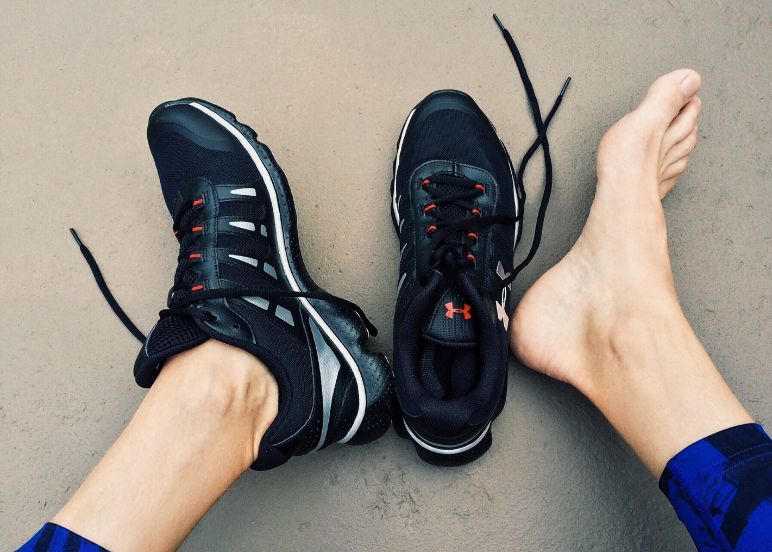
A hammertoe is not just a cosmetic nuisance it is a mechanical breakdown. The good news? You do not have to live with the ache, and you rarely need to start with surgery. At Benton Franklin Orthopedic Associates (BFOA), our conservative-first approach helps you regain your active lifestyle without unnecessary intervention.
Understanding Hammertoes: Root Causes and Progressive Stages
To solve forefoot pain, you must first understand the structural imbalance driving it. A hammertoe occurs when the complex network of muscles, tendons, and ligaments that control toe movement loses its natural balance, pulling the middle joint upward and forcing the tip to curl down.
Common Causes of Hammertoe
- Ill-Fitting Footwear: High heels force your body weight directly onto the delicate forefoot, jamming toes into an unnaturally bent angle. Pointed-toe shoes and footwear with narrow toe boxes cramp the toes together, holding them in a flexed posture for hours until the surrounding tendons physically shorten.
- Foot Biomechanics and Inherited Structure: Structural traits like high arches, flat feet, or having a second toe that is longer than the big toe radically alter how pressure distributes across your foot during a stride. Over time, these biomechanical irregularities place unequal tension on individual toes, pulling the joint out of alignment.
- Trauma and Neuromuscular Conditions: A severe stub, a broken toe that healed improperly, or repeated micro-trauma from athletic impacts can trigger chronic joint inflammation. Additionally, nerve conditions like peripheral neuropathy or systemic diseases such as rheumatoid arthritis disrupt nerve signals to the intrinsic foot muscles, leading to rapid muscular imbalance.
The Two Critical Stages of Hammertoe Progression
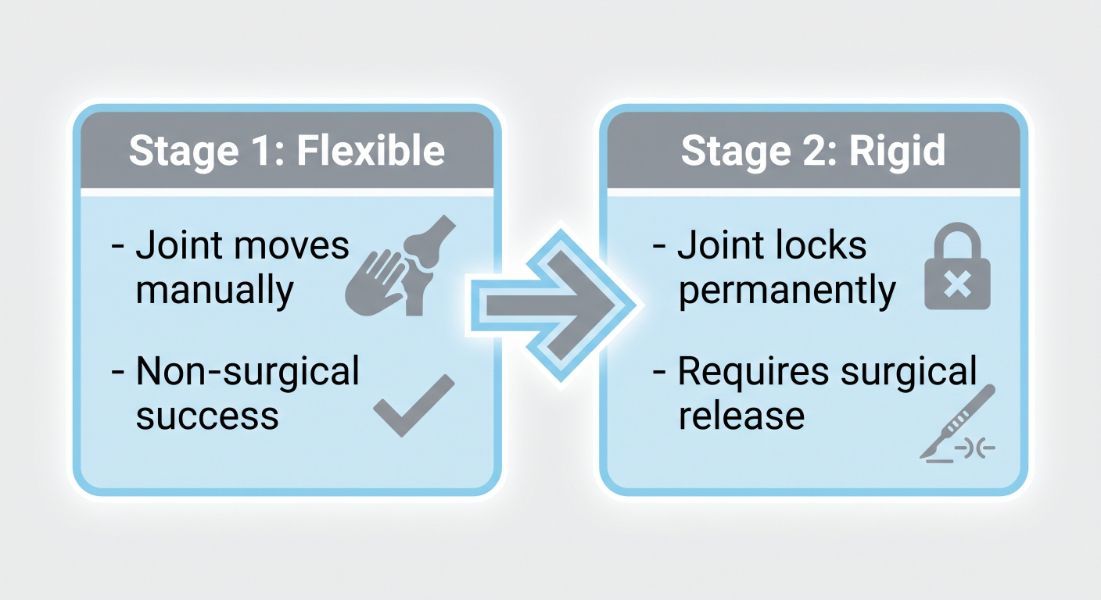
Stage 1: Flexible Hammertoe (Early Intervention Phase)
In its earliest phase, the affected toe joint retains its ability to bend and flatten. You can easily straighten the toe manually with your fingers, though it curls back when released. Because the surrounding tendons have not yet permanently contracted or scarred, this stage responds exceptionally well to non-surgical therapies, custom orthotics, and targeted physical rehabilitation.
Stage 2: Rigid Hammertoe (Chronic Phase)
If left untreated, a flexible hammertoe inevitably worsens. Over months or years, the tendons shorten, joint tissues stiffen, and structural cartilage shifts into a fixed position. At this stage, the joint locks completely and you can no longer straighten the toe by hand. Rigid hammertoes cause severe, sharp pain with every step, frequently leading to open friction sores, corns, and chronic inflammation that conservative measures alone cannot resolve.
The Daily Cost of Ignored Toe Pain
Ignoring a bending toe leads to friction corns, painful calluses, and burning forefoot pain. Worse, it triggers a biomechanical ripple effect throughout your entire body.
When you shift your weight outward or limp to avoid placing pressure on a painful toe joint, you alter your body's natural alignment. That minor toe ache quickly transforms into secondary knee strain, hip misalignment, and lower back pain, turning routine daily errands across the Tri-Cities into an exhausting ordeal.
Best Tips to Prevent and Manage Hammertoe Pain
Preventing progression requires daily attention to foot mechanics and smart lifestyle choices. Implementing proactive strategies early can stop a flexible hammertoe from hardening into a rigid deformity.
Advanced Prevention and Self-Care Techniques
- Prioritize Functional Footwear: Choose shoes featuring a wide, wide-deep toe box that allows your toes to splay naturally without touching the upper leather. Ensure there is at least a thumb’s width of space between your longest toe and the tip of the shoe, and avoid heel heights greater than two inches.
- Targeted Physical Therapy and Exercises: Strengthen the intrinsic foot muscles daily to balance tendon pull. Practice towel curls (using your toes to scrunch a small towel across the floor), marble pick-ups (lifting marbles into a cup using only your toes), and manual toe stretches, holding the toe straight for 30 seconds at a time.
- Custom Orthotics and Offloading: Off-the-shelf inserts rarely fix structural imbalances. Custom-molded orthotics prescribe specific arch support and metatarsal pads to redistribute pressure away from the ball of the foot, taking destructive tension off the toe joints.
- Protective Padding and Gel Shields: Use non-medicated silicone gel sleeves or toe crest pads to cushion exposed joint tops. This prevents direct skin rubbing against shoe material, stopping painful corns, blisters, and skin breakdown before they form.
Correcting Hammertoes: Conservative First, Surgical Precision When Needed
At BFOA, we have spent 30 years sticking to a simple promise: we exhaust every non-surgical option before discussing a procedure.

When conservative care is not enough or if your hammertoe has progressed to a rigid stage board-certified specialist Dr. Derrick J. McKay, DPM provides advanced corrective options tailored to your specific anatomy.
What Surgical Correction Involves
- Tendon Release or Transfer: Rebalancing the soft tissue so the toe lies flat naturally without tension.
- Arthroplasty or Fusion: Removing a tiny portion of bone at the rigid joint to realign the toe and permanently prevent it from curling again.
Because BFOA operates its own state-of-the-art High Desert Surgery Center, your entire journey from physical therapy to outpatient surgery happens under one roof, guided by the same local team you already trust. Explore our specialized care options for hammertoe in Kennewick, WA to learn more about how we help local patients.
Preguntas Frecuentes: Atención Médica para la Comunidad Hispana
En Benton Franklin Orthopedic Associates, entendemos que la atención médica es más efectiva cuando se comunica en su idioma preferido. Si sufre de dolor en los dedos del pie, callosidades o dificultades para caminar, nuestro equipo bilingüe está listo para ayudarle. Priorizamos tratamientos no invasivos y terapias personalizadas antes de considerar la cirugía, asegurando una recuperación cómoda para nuestra comunidad hispana en Kennewick, Pasco y Richland.
Frequently Asked Questions
Can a hammertoe fix itself over time without medical treatment?
No. Hammertoes are progressive mechanical deformities that never self-correct. Because the underlying muscle and tendon imbalance continuously exerts uneven force on the joint, an untreated hammertoe gradually stiffens and worsens over time. Early conservative intervention can halt progression, but delaying care allows flexible joints to lock into permanent, rigid deformities.
Is hammertoe surgery painful, and what does the recovery process look like?
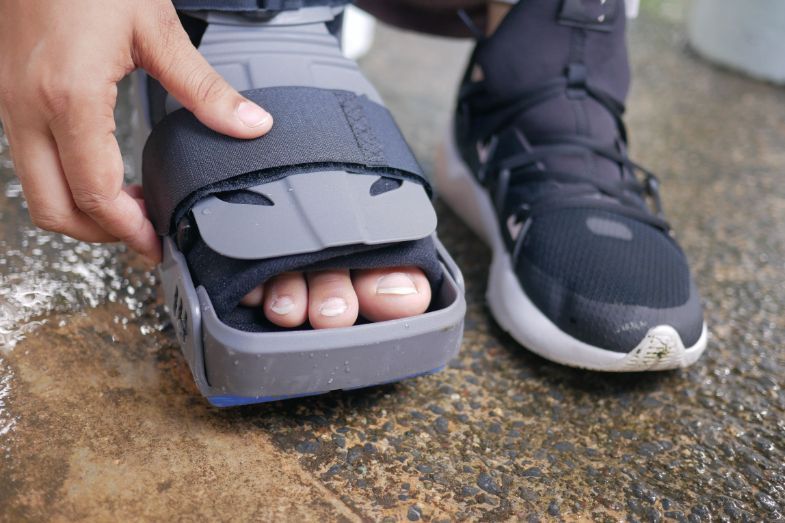
Modern outpatient techniques performed by Dr. McKay minimize surgical trauma, making post-operative pain very manageable with standard prescription or over-the-counter pain relievers. Most patients walk out of the High Desert Surgery Center the same day wearing a specialized protective post-operative boot. While full bone healing takes approximately 4 to 6 weeks during which you transition back to wide athletic shoes most individuals return to light daily activities and desk work within just a few days.
How do I determine whether my hammertoe is flexible or rigid at home?
You can perform a simple manual check: gently hold the curled toe and attempt to push it straight using your fingers. If the toe joint moves easily and flattens out fully without severe resistance, your hammertoe is still flexible and will likely respond well to non-surgical care. If the joint feels completely locked, rigid, or causes intense sharp pain when you attempt to move it, the deformity has progressed to a rigid state.
Will I need to wear custom orthotics permanently after receiving treatment?
While orthotics are not strictly mandatory for every patient post-treatment, they are highly recommended. A hammertoe forms because of your unique foot structure and gait mechanics. Correcting the toe joint whether conservatively or surgically does not alter your fundamental bone structure. Wearing custom orthotics long-term protects your investment by supporting your arch, preventing pressure buildup on adjacent toes, and reducing the risk of hammertoes forming on other toes.
Take the First Step Toward Relief
Do not wait for a flexible toe to turn into a permanent problem. Restore your mobility and live without forefoot pain.
Call
509.586.2828 to schedule your consultation with Dr. Derrick J. McKay and the BFOA podiatry team today.