Stryker Mako Knee Replacement Advantage in the Tri-Cities
As the largest joints in the human body, your knees carry your body weight and drive almost every movement you make from walking and climbing stairs to kneeling and sitting down. When chronic knee pain sets in, simple everyday movements feel like monumental challenges. Across the Tri-Cities region, arthritis and joint injuries force thousands of residents to compromise their independence and step away from the active lifestyle they love.
Understanding the root cause of your discomfort is the first step toward lasting relief. At Benton Franklin Orthopedic Associates (BFOA), our team has spent over 30 years helping patients in Kennewick, Pasco, and Richland restore their mobility, reduce pain, and get back to living fully.
Why Does Your Knee Hurt? Understanding Osteoarthritis and Joint Damage
Healthy knee joints rely on a smooth layer of articular cartilage that acts as a natural shock absorber, allowing bones to glide effortlessly against one another. Over time, that protective cartilage can wear away due to repetitive stress, prior traumatic injuries, or natural aging.
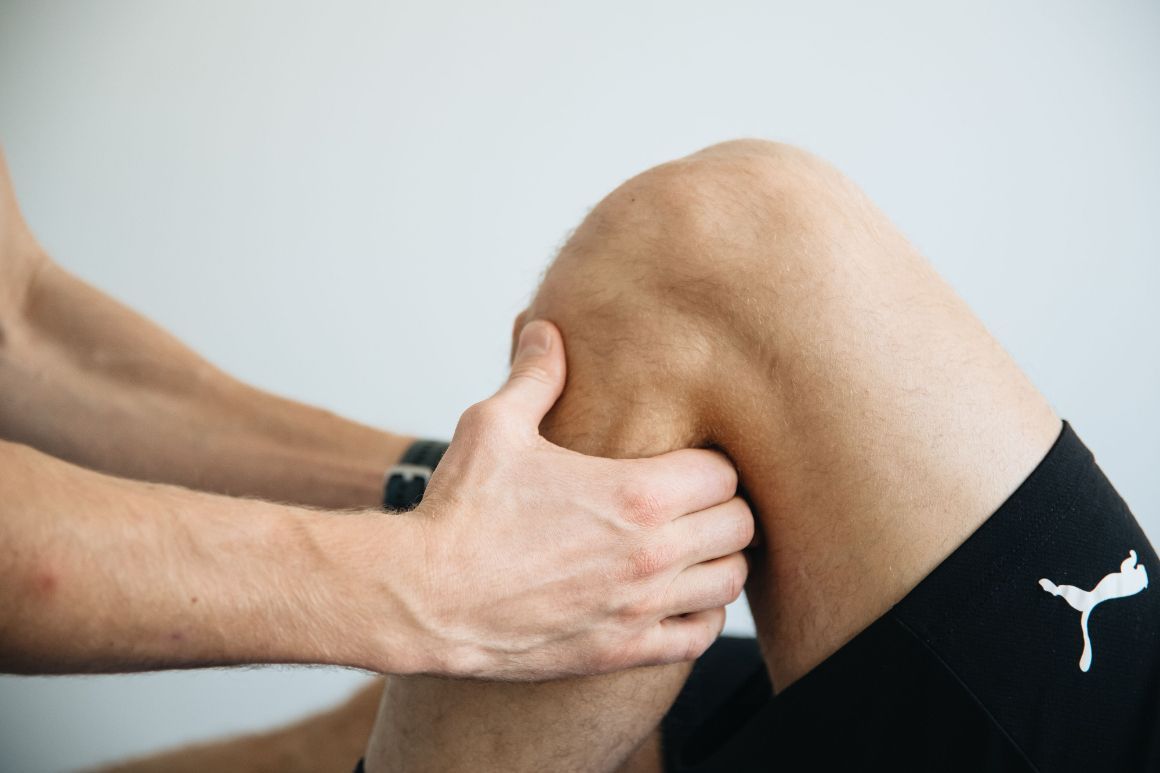
The most frequent culprit behind chronic knee pain is osteoarthritis, a progressive degenerative joint disease affecting over 54 million Americans. As osteoarthritis advances, the smooth cartilage deteriorates, causing bone-to-bone contact, inflammation, joint stiffness, and chronic swelling.
Common signs that osteoarthritis is affecting your knee include:
- Persistent pain or aching during or after physical activity.
- Morning joint stiffness or stiffness after sitting for extended periods.
- A grinding, clicking, or catching sensation (crepitus) inside the joint.
- Limited range of motion that makes bending or straightening the leg difficult.
- Increased joint swelling and tenderness around the kneecap.
Exhausting Non-Surgical Options Before Considering Surgery
At BFOA, our foundational philosophy centers on conservative care. Surgery should never be the immediate default option; it is considered only after comprehensive non-surgical treatments no longer provide meaningful relief.
When you consult with our orthopedic specialists, we evaluate your condition using modern diagnostic imaging and explore conservative therapies tailored to your lifestyle:
- Targeted Physical Therapy: Strengthening the quadriceps, hamstrings, and stabilizing muscles around the knee to reduce stress on the joint.
- Lifestyle & Activity Adjustments: Incorporating low-impact exercises (such as swimming or cycling) and weight management strategies to decrease joint pressure.
- Interventional Joint Injections: Utilizing corticosteroid injections to curb localized inflammation or viscosupplementation (hyaluronic acid) to lubricate the joint.
- Regenerative Medicine: Exploring advanced therapies like platelet-rich plasma (PRP) to support soft tissue recovery.
When Is It Time to Consider Knee Replacement?
If non-surgical treatments no longer relieve your pain, if joint discomfort wakes you up at night, or if stiffness severely limits your ability to perform basic daily activities, it may be time to discuss surgical joint reconstruction with a specialist.
What Is the Stryker Mako Robotic Knee Replacement System?
When conservative care has done all it can, modern technology offers a transformative solution. BFOA provides advanced robotic-arm-assisted surgery with the Stryker Mako Robotic Knee Replacement in Kennewick, WA.
The Stryker Mako system is not an autonomous robot performing surgery on its own; rather, it is an intelligent robotic arm guided directly by your orthopedic surgeon. By blending computer-assisted navigation, 3D modeling, and real-time haptic feedback, Mako allows your surgeon to execute a joint replacement tailored specifically to your unique anatomy.
Key benefits of Mako robotic knee replacement include:
- Custom Alignment: Implant placement is planned down to the millimeter based on your specific joint structure.
- Tissue Preservation: Precise surgical boundaries help protect healthy bone, surrounding ligaments, and delicate soft tissue.
- Natural Joint Motion: Accurate implant positioning leads to more natural-feeling movement post-surgery.
- Faster Recovery: Enhanced surgical precision minimizes unnecessary trauma, supporting a smoother post-operative rehabilitation process.
Inside the Procedure: The 5-Step Mako Surgical Process
The Mako system changes how knee replacement surgery is planned and performed. Based on clinical protocols and advanced surgical mapping, the procedure follows a structured five-step path:
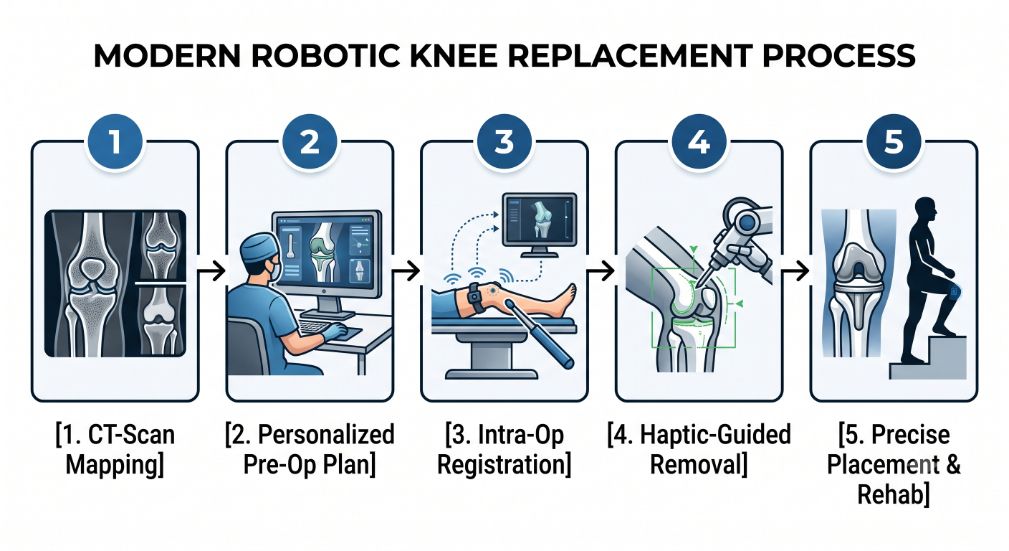
1. High-Definition CT Scan & 3D Virtual Modeling
Prior to your procedure, a specialized CT scan takes detailed cross-sectional X-rays of your knee joint. The Mako software converts these images into a dynamic, 3D virtual model of your unique anatomy, revealing anatomical details that traditional 2D X-rays cannot capture.
2. Personalized Pre-Operative Surgical Planning
Using the 3D model, your surgeon evaluates implant size, orientation, and alignment before stepping into the operating room. This pre-operative plan allows your doctor to pre-select the exact implant dimensions and position ideal for your bone structure.
3. Intra-Operative Registration & Dynamic Balancing
During surgery, your surgeon uses a specialized probe to map physical points on your knee to the 3D model on screen. Once the actual anatomy is registered in real-time, the surgeon flexes and extends your leg to analyze joint tension and ligament balance before making any bone cuts.
4. Tactile & Visual Boundary Protection (AccuStop™)
As your surgeon guides the robotic arm to remove diseased bone and damaged cartilage, the Mako system establishes virtual boundaries. AccuStop™ tactile technology provides physical resistance if the instrument strays past the planned area, while green visual cues on screen show precisely how much bone has been removed. This dual protection preserves healthy bone and guards adjacent soft tissue and ligaments against accidental injury.
5. Custom Implant Placement & Rehabilitation
Once the damaged surfaces are cleared, the custom knee implant is secured in place with exact alignment. After confirming smooth movement, you are transitioned to the recovery suite, where BFOA’s coordinated care team begins your personalized rehabilitation plan to rebuild strength and flexibility.
Trust Your Joint Care to Dr. Michael Sherfey
Surgical technology is only as effective as the hands that guide it. At BFOA, patients receiving robotic knee replacements benefit from the clinical expertise of Dr. Michael Sherfey, DO.
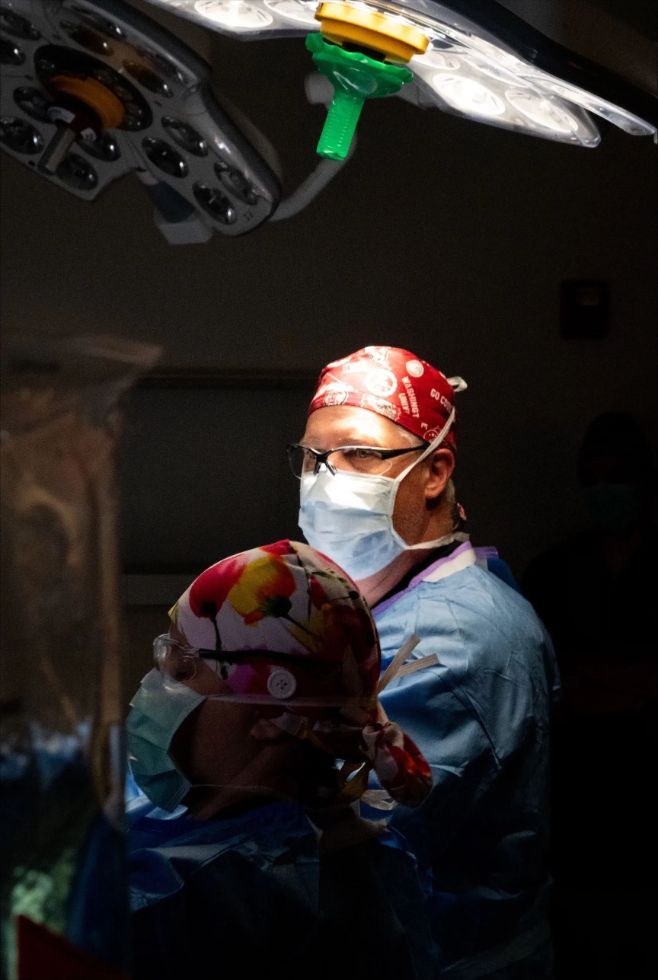
Dr. Sherfey is a board-certified orthopedic surgeon fellowship-trained in adult reconstructive hip and knee surgery. As a recognized regional instructor and advocate for Mako robotic technology, Dr. Sherfey has performed hundreds of robotic-assisted joint replacements throughout the Tri-Cities.
By pairing advanced surgical training with BFOA’s comprehensive setup, including diagnostic imaging, our specialized High Desert Surgery Center, and dedicated physical therapy, Dr. Sherfey ensures a smooth, supportive journey from your initial diagnosis through full recovery.
Schedule Your Knee Consultation in Kennewick Today
You do not have to let severe joint pain dictate how you live. Whether you are seeking your first non-surgical evaluation or looking to learn more about robotic knee replacement, Benton Franklin Orthopedic Associates is here to help. Our compassionate, bilingual team proudly offers bilingual services (hablamos español), so every patient in our community receives clear, comfortable care.
Take the first step toward reclaiming your active lifestyle. Contact our Kennewick office today at (509) 586-2828 or visit our trusted orthopedic services page to schedule your consultation.