Understanding Palm Bumps and Dupuytren’s Contracture
It starts with something small: a subtle knot near the base of your ring or pinky finger, or a tight patch of skin on your palm. At first, you might brush it off as a callus from working in the yard or a temporary muscle strain.
Over time, that small knot hardens into a firm cord under the skin. Gradually, it begins to draw your finger inward toward your palm. You notice it when putting on work gloves, washing your face, reaching into your pockets, or trying to shake hands. When you attempt to lay your hand completely flat on a table, you realize it’s impossible.
If this sounds familiar, you are not alone, and you are not imagining it. You are likely experiencing an early stage of Dupuytren’s contracture. It is a common, highly treatable hand condition, and you don't have to simply "live with it."
What Is Happening to My Hand?
Many patients who visit our clinic arrive having spent months searching for answers using simple, everyday descriptions of their symptoms:
- "Hard bump on palm of hand near ring finger"
- "Thickened cord under skin on hand"
- "Pinky finger stuck bent inward"
- "Hand won't lay flat on table"
It is common to mistake these symptoms for trigger finger or arthritis. However, Dupuytren’s contracture is distinct.
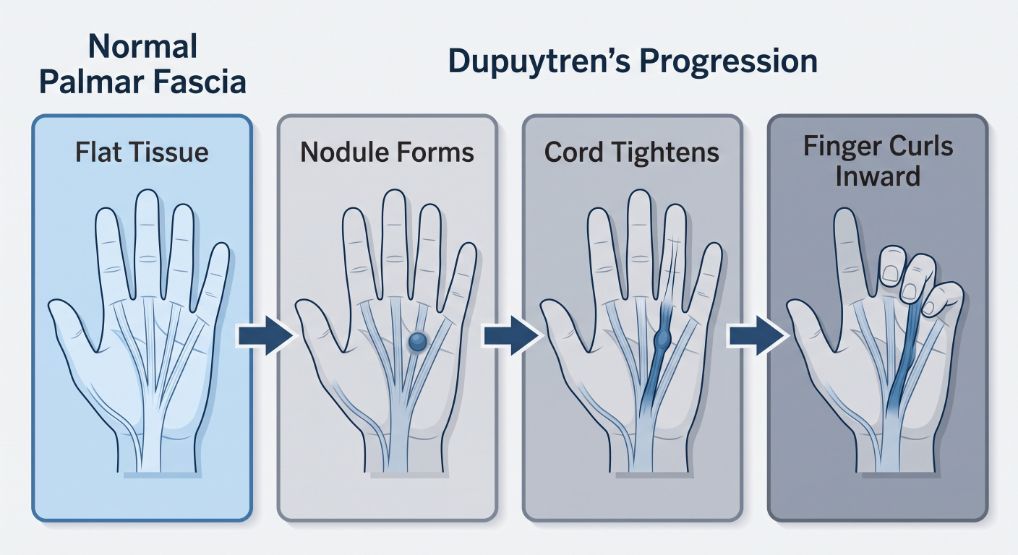
The condition affects the palmar fascia, a layer of tough, fibrous connective tissue lying just beneath the skin of your palm. In people with Dupuytren's, this tissue thickens, shortens, and tightens over time. It forms nodules (hard lumps) and cords (rope-like bands) that physically pull one or more fingers down toward the wrist.
If you suspect you have this condition, try The Table Top Test:
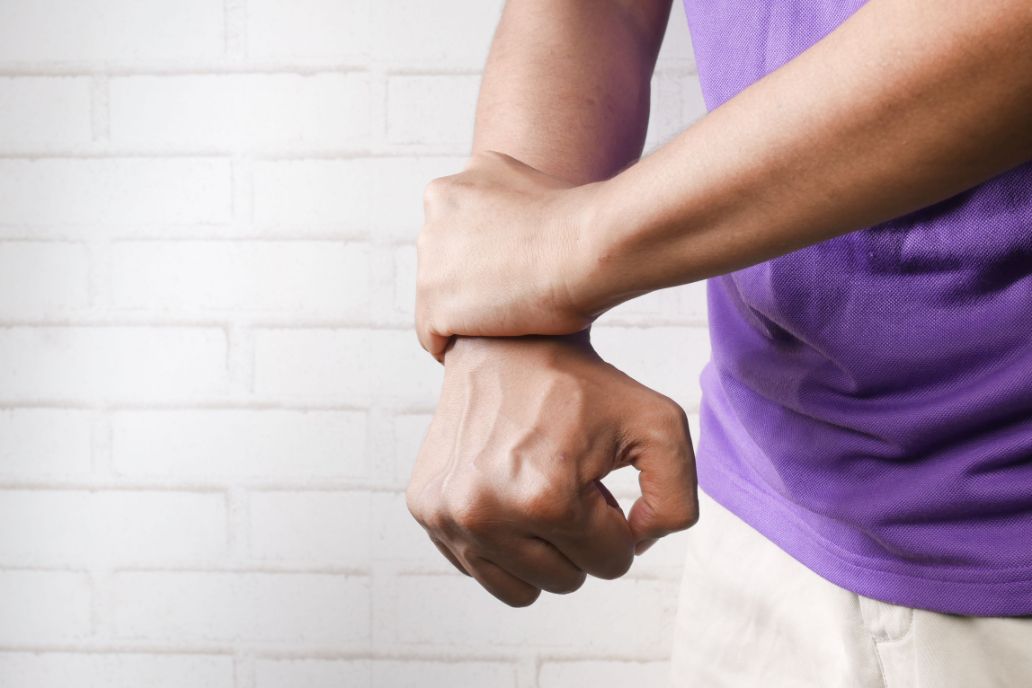
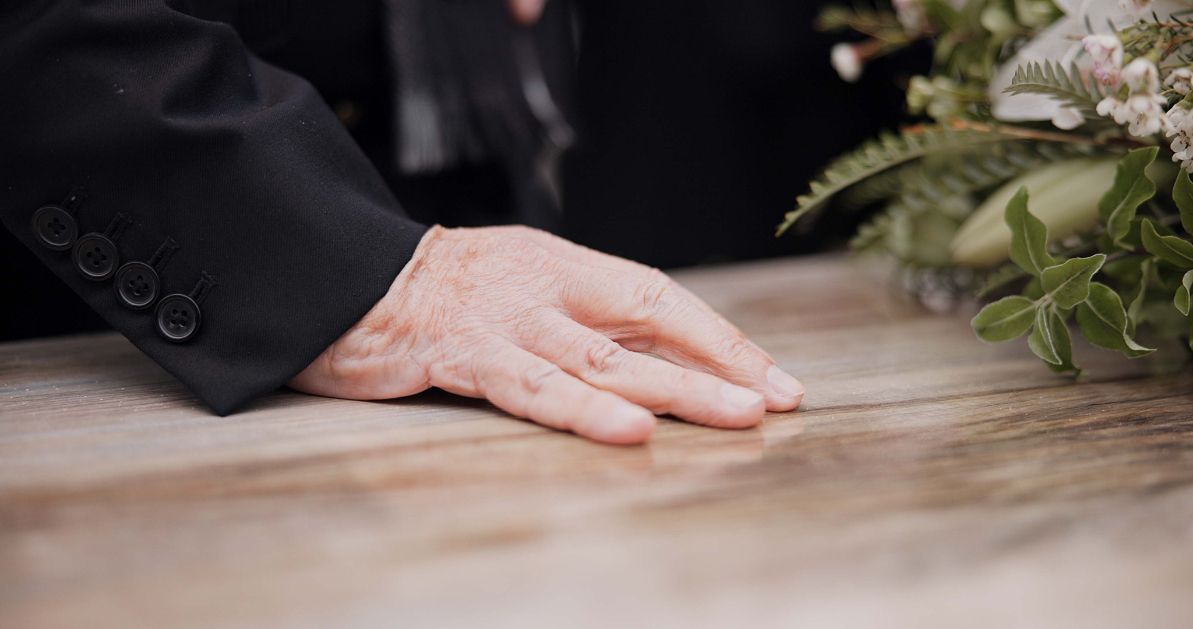
Place your hand palm-down on a flat surface. If your palm and fingers lie completely flat, your tissue may still be flexible. If you cannot flatten your hand due to a pulling sensation in your palm, it is time for a professional evaluation for hand and wrist pain in Kennewick, WA.
Causes & Risk Factors: Why Did This Develop?
A common misconception is that Dupuytren’s contracture is caused by heavy manual labor, hand injuries, or repetitive stress. In reality, it is primarily a genetic condition.
Often called "The Viking Disease" due to its prevalence in people of Northern European descent, Dupuytren's is tied to your family history and how your body produces collagen in connective tissue.
Key risk factors include:
- Genetics & Ancestry: A family history of hand stiffness or Scandinavian/Northern European lineage.
- Age & Gender: Most commonly appearing after age 50, affecting men more frequently and severely than women.
- Underlying Health Conditions: Higher incidence rates are observed in individuals with diabetes or thyroid conditions.
- Lifestyle Factors: Tobacco use and regular alcohol consumption have been linked to faster progression.
What Does Fixing It Look Like?
Discovering a lump or cord on your palm can feel concerning, but treatment does not mean immediate or major surgery. At Benton Franklin Orthopedic Associates (BFOA), our philosophy focuses on conservative care first. We only discuss surgical interventions when non-invasive options are no longer effective for your quality of life.
| Treatment Phase | Primary Goal | What Care Entails |
|---|---|---|
| 1. Observation & Tracking | Monitor progression | In early stages (painless bumps without finger curling), we track changes. Stretching and custom night splints can maintain hand mobility. |
| 2. Non-Surgical Interventions | Break up tight cords | Targeted enzyme injections (collagenase) or needle aponeurotomy can weaken and break up cords right in the clinic without open incisions. |
| 3. Surgical Care | Restore full hand function | For advanced contractures, a fasciectomy removes the thickened tissue. Surgery at High Desert Surgery Center allows a quick, seamless recovery. |
Expert Hand Care in the Tri-Cities
Restoring your hand's flexibility requires specialized care from physicians who understand the delicate anatomy of the palmar fascia, nerves, and blood vessels.
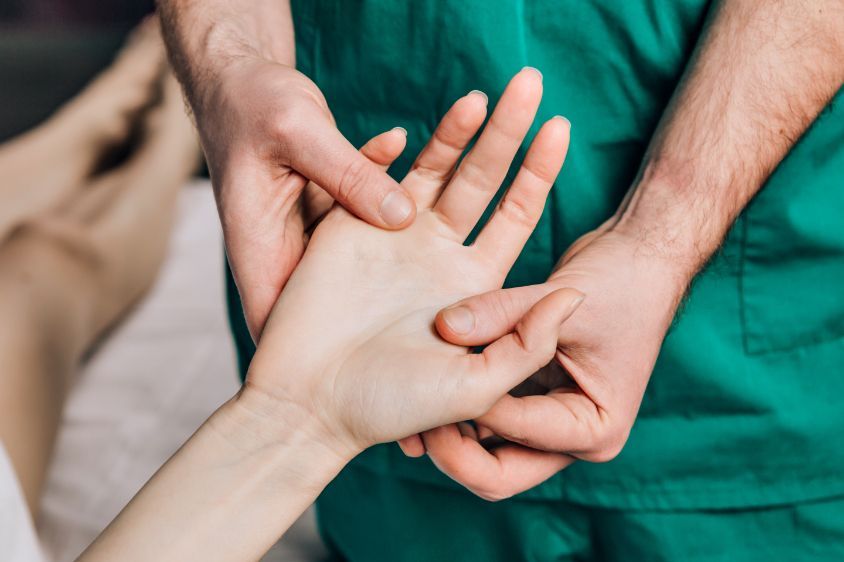
At BFOA, our fellowship-trained hand specialists deliver compassionate, personalized care to residents across Kennewick, Pasco, and Richland. Our dedicated hand surgery team includes:
Whether you need initial diagnostic monitoring or specialized care for advanced contracture, our team guides you through every step under one roof. Learn more about our comprehensive approach to Dupuytren's contracture in Kennewick, WA and our full spectrum of dependable orthopedic solutions.
Frequently Asked Questions
Is Dupuytren's contracture painful?
Usually, no. While the lumps and cords in your palm can feel tender or itchy in the early stages, the contracture itself is generally painless. The main issue is the physical restriction of finger movement.
How is Dupuytren different from Trigger Finger?
Trigger finger involves inflammation of the tendon sheath, causing a finger to catch, pop, or lock when bending. Dupuytren’s contracture involves the fascia tissue just under the skin, pulling the finger down without tendon popping or catching.
Can physical therapy cure Dupuytren's contracture?
Physical therapy and stretching cannot stop the genetic progression of tissue thickening, but specialized hand therapy can help preserve joint mobility, improve flexibility, and support post-procedure recovery.
Take the First Step Toward Flattening Your Hand
You don't have to let curling fingers or a tight palm disrupt your daily routine, work, or hobbies. Addressing Dupuytren's contracture early gives you the broadest range of conservative, non-surgical options to preserve your hand function.
Ready to get back to shaking hands, wearing gloves comfortably, and using your hands without restriction?
Visit our trusted orthopedic services contact page to request an appointment, or call our Kennewick office directly at
509-586-2828 to schedule your hand evaluation today.